
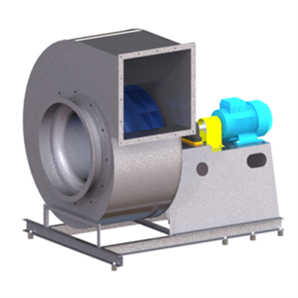
Industrial environments often involve furnaces, kilns, ovens, boilers, foundries, and other processes that generate intense heat. In these conditions, standard ventilation equipment may not be suitable. High-temperature fans are specifically designed to maintain airflow and ventilation while operating reliably under elevated thermal conditions.
Heat-Resistant Materials
One of the primary ways high temperature industrial fans withstand extreme heat is through the use of heat-resistant materials. Components exposed to elevated temperatures need to maintain their structural strength and dimensional stability during operation.
Manufacturers may select materials according to the operating temperature, airflow conditions, and application. Heat-resistant metals and appropriately engineered components help reduce deformation, wear, and premature deterioration caused by continuous thermal exposure.
Specialised Fan Construction
The construction of a high-temperature fan is designed around the conditions in which it will operate. Impellers, housings, shafts, bearings, and other components must work together while handling heat and mechanical loads.
Properly engineered clearances are also important because metal components can expand when exposed to high temperatures. Fan construction therefore needs to account for thermal expansion to help prevent unwanted contact between moving and stationary components.
Bearing and Motor Protection
Bearings and motors can be particularly sensitive to excessive heat. Depending on the application, high-temperature fan systems may incorporate suitable bearing arrangements, cooling mechanisms, or extended shaft configurations to keep sensitive components away from the hottest areas.
Motor placement and thermal protection can also help prevent overheating. Selecting the correct motor and operating configuration is important for maintaining reliable performance during prolonged use.
Heat Management and Airflow
Effective airflow management helps control temperatures within industrial processes and ventilation systems. Fans can be used to remove hot air, circulate air, or support combustion and process requirements.
The fan must be selected according to factors such as airflow volume, static pressure, temperature, operating environment, and duty cycle. Incorrect sizing can result in inefficient operation and unnecessary mechanical stress.
Manufacturing Quality Matters
The reliability of a high-temperature fan depends heavily on engineering and manufacturing quality. Businesses should evaluate material selection, fabrication standards, balancing procedures, testing practices, and quality-control processes when comparing suppliers.
When researching industrial fan manufacturers in india, buyers should also consider technical expertise and their ability to understand application-specific requirements. A manufacturer with appropriate engineering capabilities can help determine the right configuration for demanding environments.
Kumaran Industries provides industrial fan solutions designed for different operating requirements, making technical evaluation an important part of selecting equipment for high-temperature applications.
Choosing the Right Fan for Extreme Heat
Before selecting a fan, determine the maximum operating temperature, required airflow, pressure, installation environment, and expected operating duration. Sharing accurate operating conditions with the manufacturer helps ensure that the selected fan is appropriate for the application.
Regular inspection and maintenance are equally important. Checking bearings, vibration, connections, impeller condition, and other critical components can help identify potential problems before they affect performance.
Need help selecting a fan for a high-temperature industrial application? Contact Kumaran Industries to discuss your operating conditions and identify a suitable ventilation solution for your requirements.
FAQs
1. What are high-temperature industrial fans used for?
High-temperature fans are used for ventilation, hot-air removal, furnace applications, kiln systems, ovens, foundries, boilers, and industrial processes where conventional fans may not withstand elevated temperatures.
2. How do industrial fans handle extreme temperatures?
They use heat-resistant materials, specialised construction, suitable bearing arrangements, thermal protection, and carefully designed clearances to maintain performance and minimise damage from prolonged exposure.
3. Why is material selection important for high-temperature fans?
Material selection determines how effectively fan components resist thermal expansion, deformation, oxidation, and mechanical deterioration while operating continuously under demanding temperature and industrial conditions.
4. Can standard industrial fans operate in high-temperature environments?
Standard fans may not be suitable for extreme temperatures because their materials, bearings, motors, and construction may lack adequate thermal resistance for prolonged high-temperature operation.
5. What information is needed when selecting a high-temperature fan?
Important information includes operating temperature, required airflow, static pressure, process conditions, installation environment, operating duration, and application-specific requirements to determine a suitable fan configuration.


