
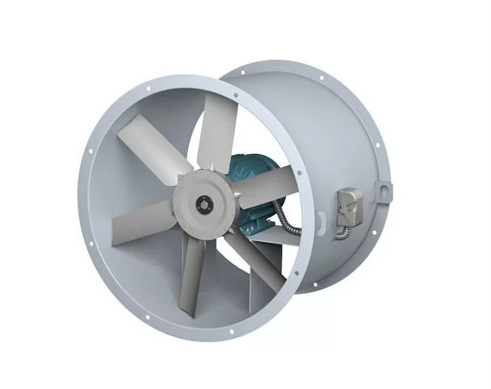
Axial flow fans are essential for maintaining proper ventilation, cooling, and air circulation across industrial facilities. Their ability to move large volumes of air efficiently makes them suitable for factories, warehouses, power plants, and processing units. But achieving consistent performance depends on more than simply manufacturing a fan—it requires careful engineering, quality materials, and precise testing.
Advanced Design and Engineering
Leading axial flow fan manufacturers in india focus on aerodynamic design to improve airflow while reducing energy consumption. Engineers carefully design blade profiles, pitch angles, diameter, and rotational speed according to the intended application. Optimized blade geometry helps the fan deliver the required airflow and pressure without unnecessary power consumption.
Computer-aided design and simulation tools can also help manufacturers evaluate airflow patterns before production. This allows potential design issues to be identified early and helps improve overall fan efficiency.
Selection of High-Quality Materials
Material selection plays an important role in fan durability and performance. Depending on operating conditions, manufacturers may use materials such as stainless steel, aluminum, or specially coated metals. The appropriate material can improve resistance to corrosion, temperature, moisture, and continuous industrial operation.
Robust construction also reduces the risk of deformation or mechanical problems, helping the fan maintain stable performance over a longer service life.
Precision Manufacturing and Balancing
Even a well-designed fan can perform poorly if manufacturing tolerances are inconsistent. Precision fabrication, accurate component assembly, and proper rotor balancing are therefore essential.
Dynamic balancing helps minimize vibration during operation. Lower vibration can reduce mechanical stress on bearings, shafts, and other components while contributing to quieter and more reliable operation.
Testing for Reliable Performance
Quality manufacturers conduct performance testing before supplying industrial fans. Testing can assess parameters such as airflow, static pressure, power consumption, rotational speed, vibration, and noise.
This process helps ensure that the finished product performs according to its specified operating requirements. It also allows manufacturers to identify manufacturing defects or performance deviations before installation.
Application-Specific Customization
Industrial facilities have different ventilation requirements, so a standard fan may not always provide the desired results. Manufacturers can customize fan specifications according to airflow requirements, installation conditions, temperature, available space, and operating environment.
Working with experienced industrial blower manufacturers can also help businesses select complementary air-moving equipment for demanding industrial applications.
Why Choose Kumaran Industries?
Kumaran Industries focuses on engineering dependable air-moving solutions designed for industrial applications. By combining suitable materials, careful manufacturing, application-focused design, and quality checks, the company aims to provide fans that deliver reliable airflow and efficient operation.
Conclusion
Fan efficiency is influenced by several factors, including aerodynamic design, material quality, precision manufacturing, balancing, testing, and application-specific engineering. Choosing a manufacturer that prioritizes these areas can help industries achieve dependable airflow, reduced energy waste, and longer equipment life.
Looking for reliable industrial air-moving solutions? Contact Kumaran Industries today to discuss your application and find a fan solution suited to your operational requirements.
FAQs
1. What makes an axial flow fan efficient?
An efficient axial flow fan uses optimized blade geometry, suitable motor selection, balanced components, and aerodynamic design to deliver the required airflow while minimizing unnecessary energy consumption.
2. How does blade design affect fan performance?
Blade profile, pitch, diameter, and angle directly influence airflow and pressure. Properly engineered blades improve air movement, reduce turbulence, and help achieve better overall operating efficiency.
3. Why is fan balancing important?
Proper balancing minimizes vibration during operation. This reduces mechanical stress on bearings, shafts, and supporting components, helping improve equipment reliability, operating stability, and service life.
4. Can axial flow fans be customized for industrial applications?
Yes. Manufacturers can customize fan size, blade configuration, materials, motor specifications, and other parameters according to airflow requirements, environmental conditions, installation limitations, and operating demands.
5. How should industries choose a fan manufacturer?
Industries should evaluate engineering capabilities, material quality, manufacturing precision, testing procedures, customization options, technical support, and experience with similar industrial applications before selecting a manufacturer.


