
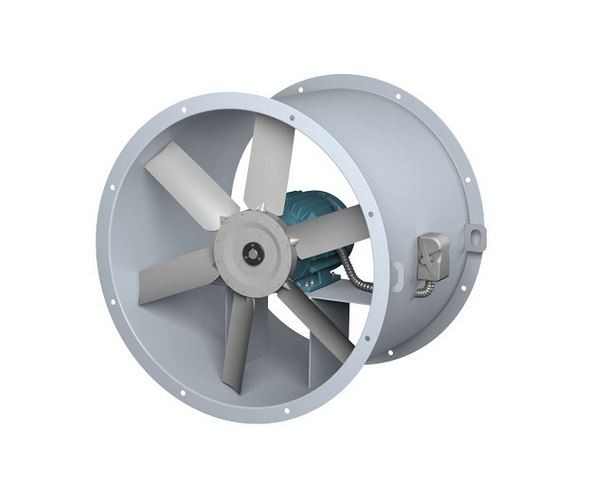
In heavy-duty industrial environments, axial flow fans are the workhorses of ventilation, relied upon to move massive volumes of air across exhaust, cooling, and HVAC systems. However, their high-speed rotational operation often brings two highly destructive by-products: excessive noise and mechanical vibration. Left unchecked, these issues do more than just violate occupational noise regulations; they cause metal fatigue, shorten the lifespan of the motor, and eventually lead to catastrophic system failure.
Fortunately, mitigating these disruptive forces is entirely possible through proper engineering, installation, and routine maintenance. Here are the most effective ways to quiet your system and stabilize its performance.
1. Implement Dynamic Balancing
The most common culprit behind violent shaking is an imbalanced impeller. Even a fraction of a millimetre of uneven weight distribution can generate severe centrifugal force at high speeds.
- Precision Tuning: Ensure your fan blades are dynamically balanced to strict tolerances before installation.
- Routine Checks: Dust accumulation, uneven chemical build-up, or minor blade wear over time can throw a fan out of balance. Regular cleaning and recalibration are essential to keep the unit stable.
2. Utilize Vibration Isolators
Never mount an industrial fan directly to a rigid concrete floor or metal ductwork without a structural buffer. Without isolation, mechanical vibrations will transfer directly into the building’s foundation and surrounding machinery.
- Spring Isolators: Ideal for low-frequency vibrations, heavy-duty spring mounts absorb mechanical shock before it reaches the floor.
- Neoprene Pads: Best suited for high-frequency vibrations, these thick rubber pads dampen the kinetic energy escaping the fan housing.
- Flexible Duct Connectors: Use heavy-duty fabric or canvas expansion joints to connect the fan to the ductwork. This severs the rigid metal-to-metal contact, preventing vibration transmission along the ventilation lines.
3. Address Aerodynamic Noise
Mechanical rattling is only half the problem; the sheer force of air slicing through the blades creates significant aerodynamic turbulence.
- Acoustic Silencers: Installing cylindrical attenuators on the inlet or outlet of the fan can absorb high-decibel sound waves without severely restricting the required airflow.
- Adjusting Blade Pitch: Sometimes, simply utilizing a Variable Frequency Drive (VFD) to slightly lower the RPM or adjusting the pitch angle of the blades can immediately reduce acoustic noise profiles.
The Value of Expert Engineering
While retrofitting an old system with isolators and silencers helps, the most effective strategy begins before the fan is even built. Partnering with top-tier axial flow fan manufacturers ensures that your equipment is designed from the ground up for acoustic and mechanical stability.
When you work with industry experts, you receive fans engineered with precision aerodynamics, rigid housings, and premium bearings that naturally resist resonance. As one of the premier axial flow fan manufacturers in India, Kumaran Industries specializes in designing heavy-duty air movement systems customized to your exact operational needs. Their custom axial fans undergo rigorous dynamic balancing and quality testing to guarantee smooth, low-noise performance, even in the harshest industrial conditions.
Silence Your Operations Today!
Don’t let unchecked vibration and deafening noise damage your equipment or endanger your workforce. Upgrade to a system engineered for seamless, quiet efficiency. Contact Kumaran Industries today to consult with our technical experts and request a custom axial flow fan solution tailored specifically for your facility!
Frequently Asked Questions
Why do axial flow fans vibrate so much?
Axial fans vibrate primarily due to imbalanced impellers. Even minor weight distribution issues generate severe centrifugal force at high speeds, causing mechanical shaking that damages the equipment over time.
How can I stop fan vibration from reaching the floor?
You can stop vibration transmission by installing heavy-duty spring isolators or neoprene pads under the fan mount. These buffers absorb mechanical shock before it reaches the building’s foundation.
What causes aerodynamic noise in axial fans?
Aerodynamic noise is caused by air violently slicing through the fan blades. High turbulence creates high-decibel sound waves, which can be mitigated by adjusting blade pitch or adding silencers.
How often should I balance my axial flow fan?
Routine dynamic balancing checks should occur annually or whenever unusual noise and vibration arise. Regular cleaning also prevents uneven dust build-up, which is a major cause of blade imbalance.
Why choose custom axial fans over standard models?
Custom axial flow fans, like those from Kumaran Industries, are engineered with precision aerodynamics and rigid housings designed specifically to resist mechanical resonance and ensure exceptionally quiet, stable operation.


