
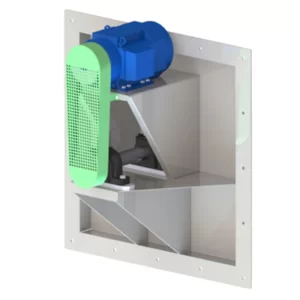
Wastewater treatment facilities rely on efficient ventilation systems to maintain air quality, control odours, and ensure smooth operational performance. Among the most reliable ventilation solutions, industrial plug fans are widely used due to their high efficiency, compact design, and ability to deliver consistent airflow. Whether it’s aeration, exhaust, or ventilation, these fans play a vital role in maintaining a safe and productive environment.
Industrial plug fans are commonly installed in treatment plants to improve air circulation in process rooms, pump stations, chemical storage areas, and sludge handling sections. These areas often generate moisture, heat, and harmful gases that need to be removed continuously. By delivering balanced airflow, plug fans help reduce humidity, prevent equipment corrosion, and improve overall working conditions.
One of the major advantages of industrial plug fans is their direct-drive design, which minimizes maintenance while improving energy efficiency. Since they do not require belt-driven systems, they operate with reduced mechanical wear and lower maintenance costs. Their compact structure also makes them suitable for installations where space is limited.
Proper fan selection is essential for achieving maximum performance. Factors such as airflow requirements, static pressure, environmental conditions, and energy consumption should be evaluated before installation. Working with experienced industrial plug fan manufacturers ensures that the selected fan matches the operational needs of the wastewater treatment facility while complying with industry standards.
Routine maintenance is equally important for long-term efficiency. Regular inspection of fan blades, motors, and electrical connections helps prevent unexpected breakdowns and extends equipment life. Cleaning accumulated dust and debris also ensures consistent airflow and reduces energy consumption.
Modern industrial plug fans can also be integrated with variable frequency drives (VFDs), allowing operators to adjust airflow based on real-time demand. This feature not only improves process efficiency but also lowers electricity costs by reducing unnecessary energy usage during low-demand periods.
For wastewater treatment facilities looking for dependable ventilation solutions, choosing trusted industrial fan manufacturers is essential. High-quality fans are designed to withstand harsh environments, corrosive gases, and continuous operation, making them ideal for demanding industrial applications.
At Kumaran Industries, we provide premium-quality industrial plug fans engineered for superior airflow performance, durability, and energy efficiency. Our solutions are designed to meet the unique ventilation requirements of wastewater treatment facilities while ensuring reliable operation and minimal maintenance.
Conclusion
Industrial plug fans are an integral part of wastewater treatment operations, helping maintain air quality, equipment longevity, and worker safety. Selecting the right fan and following proper maintenance practices can significantly improve operational efficiency while reducing long-term costs.
Looking for reliable industrial plug fans for your wastewater treatment facility? Contact Kumaran Industries today to explore our high-performance ventilation solutions designed for efficiency, durability, and long-lasting industrial performance.
FAQs
1. Why are industrial plug fans used in wastewater treatment facilities?
Industrial plug fans provide effective ventilation, remove harmful gases, control humidity, improve air circulation, and create safer working environments while supporting efficient treatment processes throughout the facility.
2. What are the advantages of industrial plug fans over traditional fans?
Industrial plug fans offer energy efficiency, compact design, direct-drive operation, lower maintenance, quieter performance, and reliable airflow, making them ideal for demanding industrial environments.
3. How often should industrial plug fans be maintained?
Industrial plug fans should be inspected regularly, with routine cleaning and maintenance scheduled according to operating conditions to ensure optimal performance, efficiency, and longer equipment lifespan.
4. Can industrial plug fans help reduce energy costs?
Yes, especially when paired with variable frequency drives (VFDs). They optimize airflow based on demand, reducing unnecessary energy consumption and lowering operational costs over time.
5. What should be considered when selecting an industrial plug fan?
Consider airflow capacity, static pressure, operating environment, energy efficiency, installation space, maintenance requirements, and application-specific needs to ensure reliable and efficient performance.


